
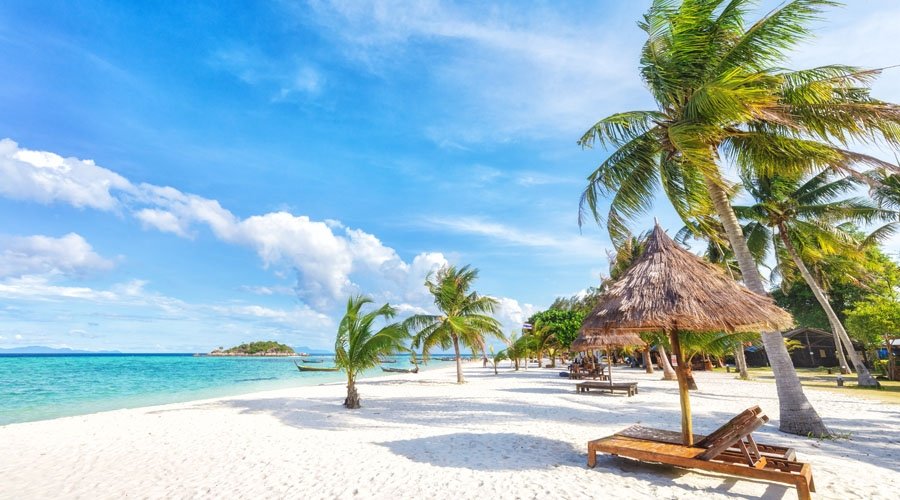
Cutbert Bay Beach—often spelled Cuthbert Bay—lies near Rangat in Middle Andaman, a quiet arc of sand and surf framed by mangroves and littoral forest. Over decades, this shoreline has earned renown as a dependable nesting ground for sea turtles, especially olive ridley and green turtles, with occasional reports of hawksbill and leatherback visits. Today, the bay sits at the crossroads of conservation and community-based tourism, offering visitors an intimate, carefully regulated window into one of nature’s most ancient rituals.
Long before roads and formal reserves, the Andaman archipelago’s coastlines—including the shores near present-day Rangat—were part of the seasonal, subsistence, and spiritual geographies of Indigenous Andamanese communities. The beaches, reefs, and mangrove creeks formed a living mosaic where foraging and small-scale fishing occurred in tune with monsoon winds and currents. Turtle arrivals, guided by celestial and oceanic cues, would have been a familiar seasonal rhythm embedded in local ecological knowledge.
During the colonial period, state priorities tilted toward penal administration and timber extraction, with Port Blair as the nucleus and Middle Andaman emerging as a forest frontier. While Cutbert Bay itself remained relatively secluded, the broader region saw the establishment of forest camps, outposts, and later, transportation corridors. This ushered in systematic mapping and resource use, gradually increasing human presence and altering coastal dynamics in places accessible by water and footpaths.
After India’s Independence, the Andaman administration supported resettlement schemes that brought communities—many from the Indian mainland and refugees from the subcontinent’s eastern migrations—into Middle Andaman. Rangat evolved into a modest hub, and as the Andaman Trunk Road (ATR) stitched islands together by road-and-ferry links, coastal access improved. With easier approach came both opportunity and risk: fishing pressure, egg collection, and shoreline disturbances that could impact sensitive nesting beaches.
As biological surveys expanded in the late 20th century, Cutbert Bay’s importance as a turtle rookery came into sharp focus. Conservation-oriented management followed, with the beach and adjoining habitats brought under formal protection as a wildlife sanctuary. Seasonal patrols, egg translocation to controlled hatcheries where needed, and visitor rules became the scaffolding of a new era—one that married scientific stewardship to carefully curated public access.
Nesting typically peaks from late fall through early spring (commonly December to March), though temporal variability occurs with currents and monsoon residues. Hatchlings emerge roughly 45–60 days after egg laying, depending on sand temperature and moisture. Dune vegetation, beach slope, and limited artificial lighting are crucial to successful orientation for both nesting females and emerging hatchlings.
As word spread of turtle nesting at Cutbert Bay, early visitors—nature enthusiasts, students, and travelers navigating the ATR—arrived seeking night-time sightings. Recognizing both the educational potential and the risks of uncontrolled activity, local forest authorities and community stakeholders established guided visits, often in small groups, supervised by trained personnel. Permits, low-impact protocols, and seasonal closures when needed became the norm.
Rather than building heavy, permanent tourism infrastructure on the dune crest, managers emphasized minimalist amenities and temporary setups aligned with nesting seasons. Rangat town provides lodging and services, while the beach itself remains serene, with access points designed to reduce trampling, light, and noise. Nearby nature attractions—such as mangrove boardwalks and quiet creeks—offer daytime alternatives that disperse visitor pressure.
Local residents increasingly serve as eco-guides, boat operators, homestay hosts, and conservation volunteers. Seasonal turtle tourism adds economic value to the protection of beaches, complementing fisheries and small-scale agriculture. Schools and youth groups often participate in awareness programs, helping embed conservation ethics across generations.
The most reliable window for nesting sightings is usually between December and March. Hatchlings often emerge several weeks after peak nesting; exact timing varies with temperature and rainfall.
Cutbert Bay’s story is one of continuity and care. The same biological impulses that drove ancestral turtle lineages to these sands now underpin a nature-based tourism model that prioritizes protection over profit. Each season’s hatchlings, guided by geomagnetic memory, speak to the endurance of marine life across generations. Each respectful visitor encounter, guided by a local steward, speaks to a modern ethic that sees communities as guardians rather than bystanders.
As sea levels inch upward and storms grow less predictable, the bay’s conservation regime—data-driven, community-rooted, and visitor-supported—will be tested. Its success will hinge on staying true to first principles: dark skies, quiet beaches, light footprints, and science-led stewardship. For travelers, the reward is profound: a night on the sand where time slows, the tide whispers, and a turtle’s ancient journey becomes a shared memory.
You may encounter both Cutbert Bay and Cuthbert Bay in signage and maps. Locally, the site is widely recognized under the latter spelling as part of the designated wildlife sanctuary, but the two refer to the same turtle-nesting beach near Rangat.
What makes us different from other tour package companies
Our travel experts have core and intense knowledge about Andaman sector with over 10 years of experience that will help you choose the best possible itinerary as per your requirements.
Our travel experts are just one call away during your tour to help you with any kind of immediate assistance so that your tour is a more enjoyable and hassle-free tour.
eAndamanTourism ensures best rates to all our esteemed guests since we have our own hotels and fleet of vehicles and drivers and there is no third-party involvement. This ensures personalized service and best rates.


Kindly enter the details below for your Andaman Tour Package


